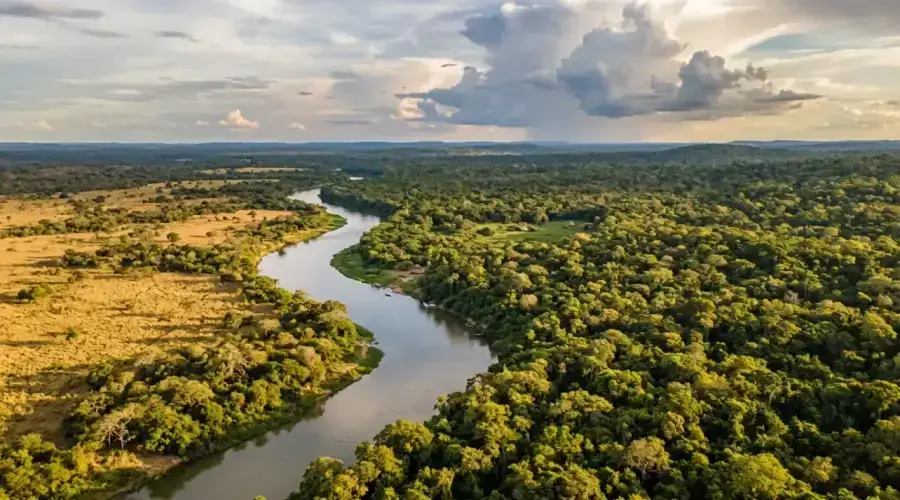

According to traveler accounts and specialized guides, Paraguay is one of the last frontiers of adventure in South America. There is no signposted Machu Picchu-style trail or all-inclusive circuit here: Paraguayan adventure is earned. It is lived in the red dust of the Chaco tracks, in the thunder of Salto Cristal waterfalls, in the silence of the dry Chaco where jaguars hunt at night. For travelers who prefer the unexpected over the scheduled, Paraguay is described as a real-scale playground, provided each expedition is well prepared.
Chaco 4×4 Expedition
The essentials
- •The Chaco covers 60% of Paraguay with less than 2% of the population, one of the emptiest regions on the planet
- •The Transchaco (830 km) is the only paved road; the rest is dirt track
- •4×4 essential, 2 spare tires, 200 L of water, satellite GPS mandatory
- •Allow plenty of time: several days of dirt track to reach Defensores del Chaco
- •Best time: May to September (dry season, 20-25 °C during the day)
The Gran Chaco covers 60% of Paraguayan territory. It is one of the least densely populated regions on the planet (less than 1 inhab./km² in the dry Chaco). The Transchaco (Route 9) is the only paved road: 830 km from Asunción to the Bolivian border. On either side, thousands of kilometers of dirt tracks, passable only by 4×4 during the dry season (May-September).
The classic route follows the Transchaco to Filadelfia (460 km, 5h), capital of the Mennonite colonies founded in 1930, then heads northwest to Mariscal Estigarribia. From there, a dirt road leads to Defensores del Chaco National Park (720,000 ha, 7,200 km²), sanctuary of the jaguar and giant armadillo. For the boldest, the track continues to Fortín Madrejón and then to the Bolivian border, 830 km of solitude.
The complete crossing from Asunción to the Bolivian border takes 3 to 5 days in a 4×4, depending on track conditions. The most common stages are: Asunción → Filadelfia (460 km, 5h paved road), Filadelfia → Mariscal Estigarribia (70 km, 1h), then Mariscal → Defensores del Chaco Park (150 km dirt track, 4-5h). Beyond, the track to Madrejón and the Bolivian border adds 2 additional days. Nights are spent at estancias or camping. You can also stop at smaller Mennonite colonies: Neuland (founded 1947, 3,500 inhabitants), Loma Plata (founded 1927, 10,000 inhabitants), which offer simple accommodations and legendary hospitality.
For those without their own vehicle, several Asunción agencies organize expeditions: Chaco Tours offers 4 to 7-day circuits with guide, 4×4, and camping gear included. Budget around 200 to 300 € per day for an organized tour including naturalist guide and meals. Groups are typically small, 4 to 8 people. The comfort is Spartan, but the trip stays with you. A middle-ground solution is to rent a 4×4 in Asunción (around 80-120 €/day, local agencies like Localiza or Águila Paraguay) and hire a local guide in Filadelfia for the most difficult stretch. This is cheaper than an organized tour while keeping an experienced guide for the technical sections.
Preparing a Chaco expedition goes beyond the vehicle. You also need to handle administrative procedures: access to Defensores del Chaco National Park and the Chaco Biosphere Reserve requires prior registration with MADES (Ministry of Environment). Registration is done online or at the MADES office in Asunción, and should be done at least a week in advance. You need to provide the list of participants, vehicle license plate numbers, and a planned itinerary. Park rangers at the entrance verify this registration and provide the latest information on track conditions.
Hiking and trekking
Paraguay has no Andean peaks, but its hills offer accessible and varied hikes. Cerro Tres Kandú (842 m), the country’s highest point, takes 3-4 hours from General Garay (Guairá department) through dense subtropical forest. At the summit, panoramic views of the Ybytyruzú mountain range.
| Hike comparison | ||||||
|---|---|---|---|---|---|---|
| Cerro Tres Kandú | 842 m | 3-4 h round trip | Moderate | General Garay (Guairá) | Free | Leave before 7am in summer |
| Cerro Corá | ~300 m | 1-3 h round trip | Easy | Cerro Corá (Amambay) | Free | Historic trails + cave paintings |
| Salto Cristal | ~150 m | 4-5 h round trip | Moderate | La Colmena (Paraguarí) | 5 € | Swimming in the pool |
| Ybycuí Park | ~200 m | 1-3 h round trip | Easy | Ybycuí (Paraguarí) | 2 € | Waterfalls, historic foundry |
| Cordillera de los Altos | ~100 m | 1-2 h round trip | Easy | Areguá/Altos | Free | Artisan villages included |
The Cordillera de los Altos, near Lake Ypacaraí, offers gentler trails through artisan villages with viewpoints over the lake. Cerro Corá, to the northeast, combines hiking and history: here Marshal Francisco Solano López fought his last battle in 1870. The national park houses pre-Columbian cave paintings and abundant wildlife (parrots, howler monkeys).
- 1Cerro Tres Kandú (842 m), 3-4h hike, Paraguay’s highest point, 360° view over the Cordillera. Start: General Garay (Guairá).
- 2Cerro Corá (northeast), historic hike at the site of the last battle of the Triple Alliance (1870). Cave paintings, abundant wildlife.
- 3Salto Cristal (La Colmena), 12 km round trip hike to a turquoise waterfall. Swimming possible. Moderate level. Guide recommended.
- 4Ybycuí Park (south-central), marked trails, waterfalls, historic iron foundry (La Rosada, 1850). Ideal for a first hike.
- 5Cordillera de los Altos, gentle trails between Areguá, San Bernardino and Altos. Perfect for combining hiking and artisan villages.
Water sports and sport fishing
With 2,695 km of the Paraguay River, 4,880 km of the Paraná, and hundreds of lakes and reservoirs, water is a major adventure playground. Kayaking and canoeing are practiced on the Paraguay River (departing from Concepción or Asunción), on Lake Ypacaraí, and on the Itaipú and Yacyretá reservoirs.
Dorado sport fishing (Salminus brasiliensis) is legendary. This tiger fish can reach 25 kg and puts up spectacular fights. The best spots are the Paraná River around Ayolas, the Tebicuary River, and the Apa River. The ideal season runs from March to November. A mandatory fishing permit is required (available from local associations or SEAM).
Beyond kayaking and fishing, the Itaipú (1,350 km²) and Yacyretá (1,600 km²) reservoirs offer ideal conditions for sailing, stand-up paddleboarding, and wakeboarding. In San Bernardino, on Lake Ypacaraí (400 km², elevation 63 m), several clubs rent water sports equipment at very affordable prices: budget 10 € per hour for a kayak, 25 € for a jet ski, 50 € for half a day on a sailboat. Sailing schools (Yacht y Golf Club Paraguayo, Club Náutico de San Bernardino) offer beginner classes for 15-20 € per session.
Rafting enthusiasts will find their spot on the Acaray River (near Itaipú) and the Monday River. The rapids are class II to III, perfect for beginners in a magnificent setting. The rafting season corresponds to the rainiest months (December-March) when the flow is sufficient. Several operators in Ciudad del Este organize guided descents (around 40 € per person, half day).
Caving enthusiasts will find their playground in the limestone grottoes of Vallemí (San Pedro department), 250 km from Asunción. This region, one of the least known in Paraguay, houses impressive natural cavities: the Gruta del Indio, Gruta de la Virgen, and Cueva de Tres de Mayo. The grottoes, formed by erosion of the Guaraní aquifer over millions of years, contain limestone formations and ancient cave paintings. Exploration is done with a local guide (mandatory, around 30-50 € per person) who knows the cavities and precautions to take. Bring hiking shoes, a helmet (sometimes provided by the guide), and a powerful headlamp.
Northern Paraguay also offers opportunities for paragliding, especially around Cerro Acahay (600 m) in the Paraguarí department. This site, still little-known, offers favorable thermal conditions from May to September. The activity is run by a small community of local paragliders, reachable through Asunción's free-flight clubs (Paraguay Vuelo Libre). Equipment can be rented on site (around 50 € per day), and a tandem flight with an instructor costs around 60-80 €. Weather conditions must be ideal: no strong wind, clear sky, moderate temperatures.
Canyoning and waterfalls
Salto Cristal, near La Colmena (Paraguarí department), is the most spectacular waterfall in Paraguay: 45 meters high, mineral-rich turquoise water, a natural pool perfect for swimming. The access hike (6 km one way) crosses sugarcane plantations and then a gallery forest. The site remains little-known: expect to be alone or nearly alone.
Monday Falls, near Ciudad del Este, are an alternative to Iguazú Falls (just 30 km away): 40 m high, three main drops, a well-maintained park with trails and viewpoints. Less spectacular than Iguazú, but also much less crowded and significantly cheaper (entry: around 2 €).
The best time to visit waterfalls depends on the water flow. In the dry season (May-September), the water is crystal clear but the flow is reduced. In the wet season (December-March), the waterfalls are spectacular but the water is cloudy with sediment. Salto Cristal maintains its turquoise water year-round thanks to minerals, making it exceptional in any season. Plan to arrive early in the morning (8-9am) to avoid the heat and get ideal light for photos.
- 1Salto Cristal, 45 m, turquoise water, La Colmena. 12 km round trip hike. Moderate level. The most beautiful waterfall in the country.
- 2Monday Falls, 40 m, Ciudad del Este. 3 drops, developed park, 30 km from Iguazú. Excellent budget-friendly plan B.
- 3Salto Suizo, isolated waterfall near Villarrica. Local swimming spot, refreshing in summer.
- 4Salto Tembey, little-known waterfall in Guairá, accessible after a 2h hike. For adventurers.
| Adventure activities comparison | |||||
|---|---|---|---|---|---|
| 4×4 Chaco | Driving | 3-5 days | 200-300 €/day | High | North/Chaco |
| Hiking | Walking | 1-8h | Free-50 € | Easy-moderate | All country |
| Kayak/Canoe | Water | 2-6h | 20-50 € | Moderate | Paraná, Ypacaraí |
| Sport fishing | Fishing | Full day | 150-200 $/day | Easy | Paraná, Tebicuary |
| Rafting | Water | Half day | 40 € | Moderate | Acaray, Monday |
| Canyoning | Aquatic | 3-5h | 40-60 € | High | Salto Cristal |
| Caving | Underground | 2-4h | 30-50 € | Moderate | Vallemí (San Pedro) |
Safety and practical tips for adventure
Last updated:
Sources
My method
This page is written from France, sourced as carefully as possible, but I can be wrong or miss on-the-ground detail. A price that changed, outdated info, a photo to share? Every correction is credited if you want.
Report an error or send info →Share