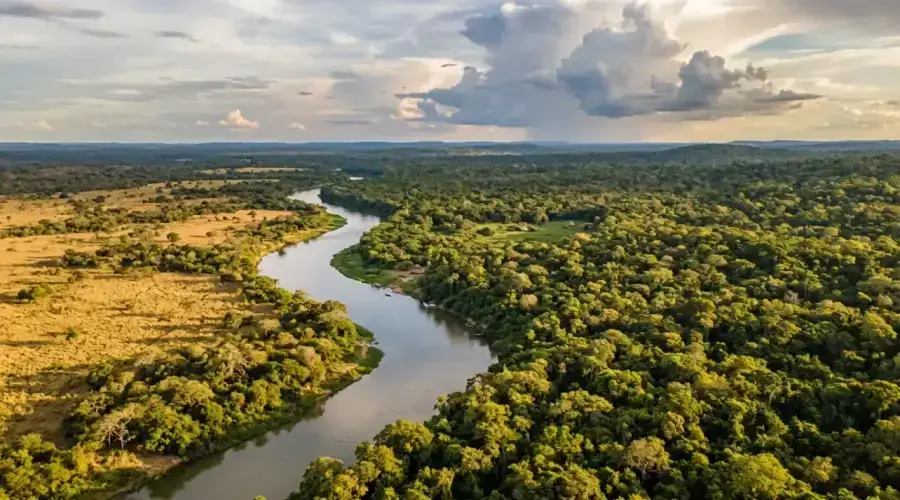

Cerro Cora is a national park and the place where the final scene of the War of the Triple Alliance, the deadliest conflict in South American history, unfolded on March 1, 1870. It was here, on the banks of the Aquidaban Nigui stream, that Marshal Francisco Solano Lopez died in combat against Brazilian troops, marking the end of a war that cost Paraguay a considerable portion of its population. Today, this park of 5,683 hectares, located in the department of Amambay a few kilometers from Pedro Juan Caballero and the Brazilian border, preserves both an unusual landscape of hills and petroglyphs as well as one of the most emotionally charged national memorial sites in the country.
The last battle of the War of the Triple Alliance
The battle of Cerro Cora was the final engagement of the War of the Triple Alliance (1864-1870), which pitted Paraguay against a coalition of Brazil, Argentina, and Uruguay. The site is located in the department of Amambay, about ten kilometers southwest of the present-day cities of Pedro Juan Caballero and Ponta Pora, very close to the current Brazilian border. The name itself, "Cerro Cora," would mean "enclosed hill" in Jopara, a faithful description of the site's distinctive terrain.
The death of Marshal Francisco Solano Lopez
On March 1, 1870, on the banks of the Aquidaban Nigui stream, Marshal Francisco Solano Lopez died at the hands of Brazilian troops, alongside his son, Colonel Panchito Lopez. The precise circumstances of his death have been recounted in detail: struck by a lance and other bladed weapons, it was ultimately a point-blank shot that ended his life. In Paraguayan national memory, this death marks the symbolic end of the war and the ultimate sacrifice of a head of state who refused to surrender until the very end.
A conflict whose scale remains staggering
The War of the Triple Alliance cost Paraguay considerable demographic losses: according to the most cited estimates, the Guarani nation lost approximately half its total population, and some estimates put male mortality as high as 90% of the men of that era. These figures, though debated by historians depending on the methodologies used, convey the scale of the national trauma this conflict still represents today, and explain the central place Cerro Cora occupies in Paraguayan collective memory.
The park today: landscapes, petroglyphs, and memory
Cerro Cora National Park today covers 5,683 protected hectares. Visitors can access the banks of the Aquidaban Nigui, the exact spot where Solano Lopez and his son died, as well as rock formations and pre-Hispanic petroglyphs scattered across the site. Every March 1, "Heroes' Day," an official ceremony pays tribute to Solano Lopez and all the combatants who fell during the war, bringing together authorities and the local population at the very site of his death.
Practical tips
| Useful information | |
|---|---|
| Getting there | About ten km from Pedro Juan Caballero, easily accessible by car. |
| When to come | March 1 to attend the official ceremony (heavy crowds); the rest of the year for a quieter visit. |
| On site | Memorial site, trails to the hills, petroglyphs; bring water, intense heat year-round. |
| Combine with | Easily combined with a stop in Pedro Juan Caballero, before or after the park visit. |
Sources
My method
This page is written from France, sourced as carefully as possible, but I can be wrong or miss on-the-ground detail. A price that changed, outdated info, a photo to share? Every correction is credited if you want.
Report an error or send info →Share