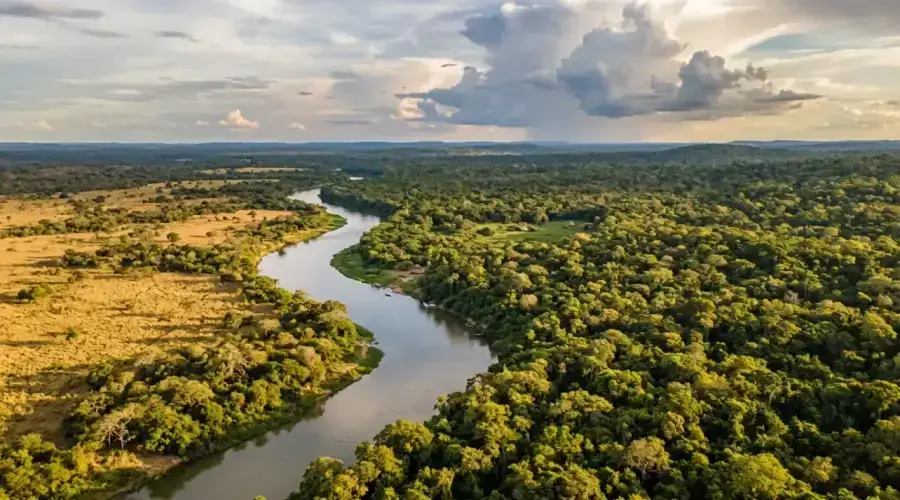

Filadelfia is without doubt the most surprising city in Paraguay: in the heart of the Chaco, one of the most arid regions in South America, you find street names in German, dairy cooperatives among the most productive on the continent, and a story of religious exile that begins in 1930 in Stalin's Soviet Union. Founded in 1931 as the administrative center of the Fernheim colony, Filadelfia is today the essential gateway to understanding how Mennonite communities transformed a green desert into a prosperous agricultural zone, preserving their language, faith and way of life.
A city born of religious exile
The story of Filadelfia begins far from Paraguay, in the Soviet Union, where Mennonite communities of the Anabaptist faith suffered growing religious persecution under the Stalinist regime. In 1930, approximately 1,562 Mennonites chose exile and settled in the Paraguayan Chaco, a region then almost unoccupied, to found the Fernheim colony, literally 'distant home' in German. A year later, in 1931, the colonists created Filadelfia as a common administrative center for the colony's villages and as a place for processing agricultural products.
A colony organized village by village
The Mennonite settlers organized themselves into twelve initial villages of twenty to twenty-five farms each, within what is called the Western Region of Paraguay. In the following years, other groups of settlers joined the colony, raising the total to twenty-five villages around the administrative center of Filadelfia. During its early years, the city remained completely isolated, without road connection to other municipalities in the country, let alone Asuncion: travel represented a major logistical ordeal for the inhabitants.
An agricultural economy turned continental benchmark
What surprises today in Filadelfia is the contrast between the aridity of the surrounding landscape and the efficiency of the agriculture practiced by the Mennonite colonies. Cattle ranching and dairy production, organized in cooperatives, have made this region one of the pillars of the Paraguayan livestock economy, despite some of the most difficult climatic conditions in the country. Tourism is also progressively developing, driven by curiosity about this history and by the access Filadelfia offers to the nature reserves of the central Chaco.
The Jakob Unger museum and the memory of the colony
The Jakob Unger museum, located in Filadelfia, traces the history of the arrival of the Mennonite settlers, their living conditions in the early years, and the evolution of the colony to the present day. It is the recommended starting point to concretely understand what it meant, in 1930, to settle in a region without roads, without guaranteed running water, and hundreds of kilometers from any other city. The community commemorates each year the arrival of its pioneers, a ritual that testifies to the still lively attachment to this founding memory.
Practical tips
| Useful information | |
|---|---|
| How to get there | Approximately 460 km from Asuncion via the Trans-Chaco route (PY09), paved, 5 to 6 h of travel. |
| When to come | May to September (dry season), secondary roads become difficult in the rainy season. |
| Language | Spanish, Guarani, but also German (Plautdietsch) spoken by the Mennonite community. |
| Combine with | Filadelfia + Mariscal Estigarribia to continue towards the western Chaco. |
Sources
My method
This page is written from France, sourced as carefully as possible, but I can be wrong or miss on-the-ground detail. A price that changed, outdated info, a photo to share? Every correction is credited if you want.
Report an error or send info →Share