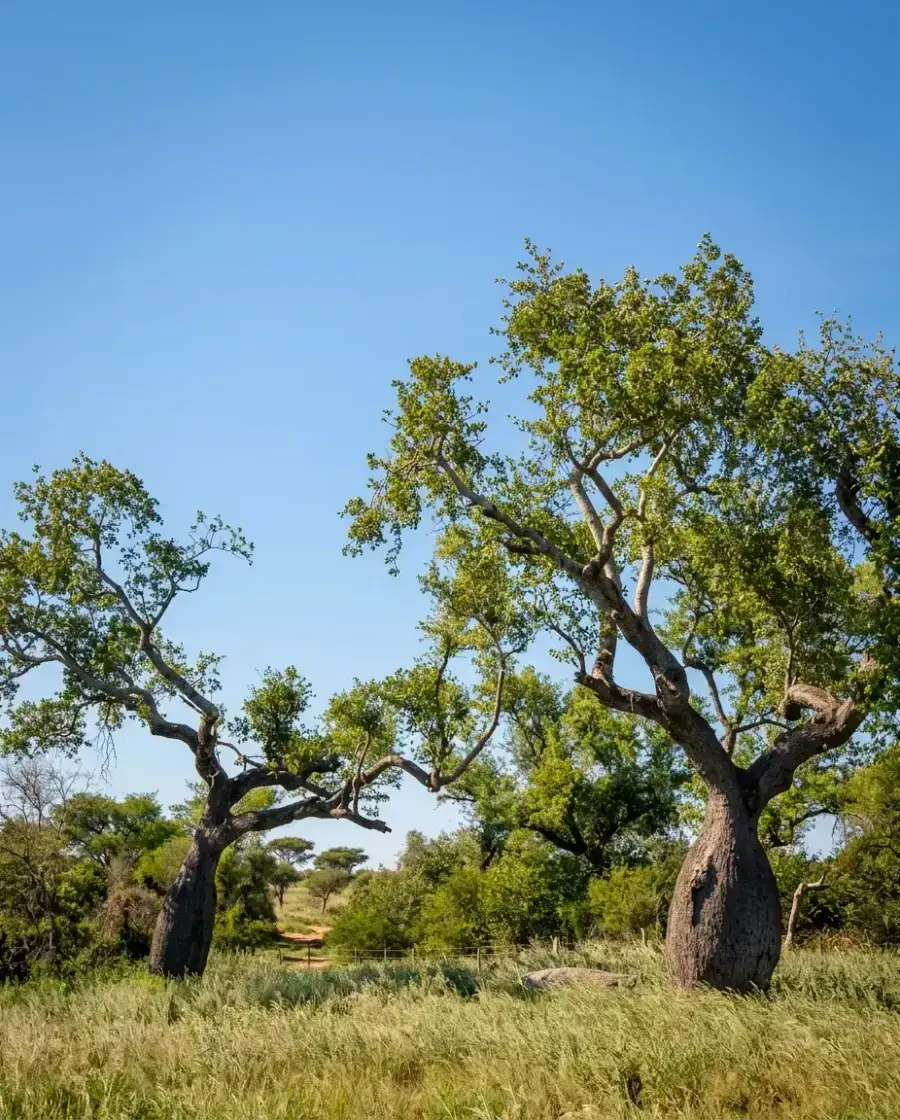

Northern Paraguay is understood through emptiness and memory. The Chaco covers most of the national territory but houses only a tiny fraction of the population: it is the least populated and most rugged region of the country, where distances are measured in hours of driving rather than kilometers. But the North is also Concepcion and its river, the Mennonite colonies that transformed a desert into a cattle-ranching zone, and Cerro Cora, where the deadliest war in South American history ended in 1870. I have gathered here what you need to know before venturing into this region, the least visited and without doubt the most surprising in the country.
To remember about Northern Paraguay
- 1The Chaco covers approximately 60% of the national territory with a tiny fraction of the total population
- 2Concepcion, the 'Pearl of the North', founded in 1773, remains the great river port of the North
- 3Filadelfia and the Mennonite colonies of the Chaco: a singular exile story in South America, since 1930
- 4Cerro Cora: the exact place where the War of the Triple Alliance ended, on March 1, 1870
- 5Defensores del Chaco: the largest national park in the country, 7,200 km², demanding access
- 6Pedro Juan Caballero: border city merged with Brazil, to combine with caution
A region defined by emptiness and distances
Northern Paraguay is not a region in the sense that travelers accustomed to the South or Center of the country understand it. It is a space where distance itself becomes a travel theme. Between Concepcion and Filadelfia, between Filadelfia and Mariscal Estigarribia, between Mariscal Estigarribia and the Bolivian border, the kilometers accumulate without major landscape changes: dry forest, palm groves, straight roads, constant heat. This apparent homogeneity hides, however, very different worlds from one another.
The Chaco occupies most of the country's surface, but remains the least populated region. This disproportion structures everything: the lack of infrastructure, the scarcity of drinking water outside developed areas, the isolation of indigenous and Mennonite communities, and the need for the traveler to prepare their itinerary with more rigor than in the rest of the country.
Two Norths in one: the river and the desert
One must distinguish two very different Norths. To the east, along the Paraguay River, Concepcion and its region belong to a fluvial world, humid, historically oriented toward the trade of yerba mate, timber and cattle towards Asuncion and beyond. To the west, the Chaco proper, a semi-arid region, opens onto a green desert populated by Mennonite colonies, indigenous communities and exceptional wildlife, all the way to the Bolivian border.
These two Norths do not resemble each other, but they complement each other in a single journey: the river gentleness of Concepcion as an opening, the aridity and silence of the Chaco as a deepening, until the historical weight of Cerro Cora closes the circle on national memory.
The history that shaped the North
Two major conflicts permanently marked this region. The War of the Triple Alliance (1864-1870) ended right here, at Cerro Cora, with the death of Marshal Francisco Solano Lopez on March 1, 1870, on the banks of the Aquidaban. Six decades later, the Chaco War (1932-1935) against Bolivia unfolded largely in the arid expanses west of Filadelfia, leaving names of forts ('fortines') still visible on current maps, such as the one that became Mariscal Estigarribia.
An agricultural, border and singular region
The economy of the North is built on unexpected pillars. The Mennonite colonies of the central Chaco, who arrived from the Soviet Union and Canada from 1930 fleeing religious persecution, transformed one of the most arid regions of the country into a center of cattle ranching and dairy production among the most efficient in South America. Further east, Concepcion remains an active port, though much reduced from its 19th century golden age. To the northeast, Pedro Juan Caballero forms with the Brazilian city of Ponta Pora a binational conurbation of over 200,000 inhabitants, where border trade occupies a central place.
According to your tastes
| What you're looking for | |
|---|---|
| River and colonial heritage | Concepcion |
| Mennonite culture and cattle ranching | Filadelfia and the Chaco colonies |
| Great wild nature | Defensores del Chaco park |
| National history and memory | Cerro Cora |
| Border and trade | Pedro Juan Caballero |
| Immensity and mythical route | Mariscal Estigarribia and the Trans-Chaco |
When to go to the North
| By season | |
|---|---|
| May to September | Dry season, roads passable, heat more bearable in the Chaco |
| October to April | Rainy season, some Chaco roads can become impassable |
| March 1 | Heroes' Day at Cerro Cora: national commemoration, strong local attendance |
Recommended itineraries
- 14 days (river version): Concepcion and its historic center, river excursion, return via Asuncion.
- 26-7 days (Chaco version): Asuncion, Trans-Chaco to Filadelfia, Mennonite colonies, Mariscal Estigarribia, return.
- 38-10 days (full version): Concepcion, Filadelfia, Mariscal Estigarribia, incursion towards Defensores del Chaco with operator, return via Cerro Cora and Pedro Juan Caballero.
Sources
- MADES - Defensores del Chaco Park
- Wikipedia - Concepcion (Paraguay)
- Wikipedia (EN) - Fernheim Colony
- Wikipedia - Battle of Cerro Cora
- Wikipedia - Mariscal Jose Felix Estigarribia
- La Nacion - Filadelfia, a pillar of tourism and cattle ranching in the Chaco (2025)
- DINAC - Directorate of Meteorology and Hydrology
- SENATUR - Tourism in Paraguay
My method
This page is written from France, sourced as carefully as possible, but I can be wrong or miss on-the-ground detail. A price that changed, outdated info, a photo to share? Every correction is credited if you want.
Report an error or send info →Share