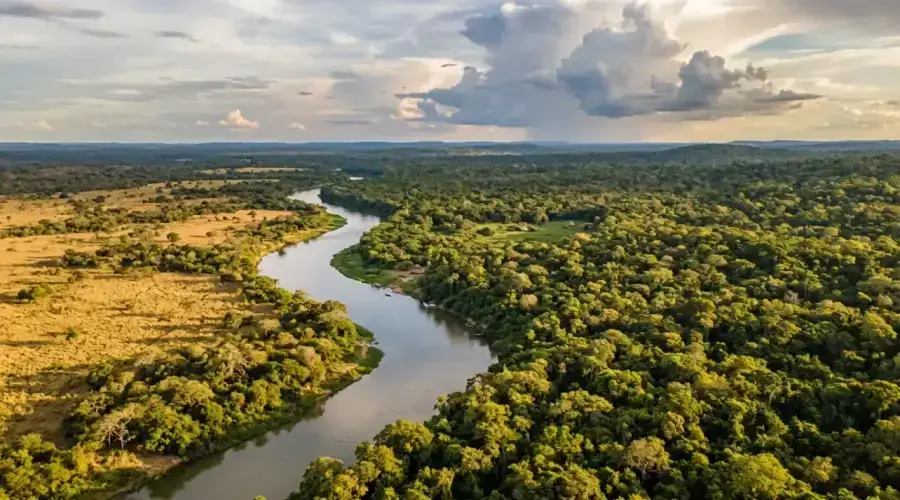

I gathered and documented these activities from France, cross-referencing official sources (SENATUR), reference guides and traveler testimonials published online. The conclusion is unanimous across these sources: Paraguay is not a mass tourism destination, and that is precisely its appeal as an exploration ground in South America. From the Chaco trails to the ñandutí workshops of Itauguá, from the dorado-filled rivers to the Guaraní meditation retreats, here are the 9 activity families documented by the sources cited at the foot of the page.
Why activities in Paraguay are different
Key takeaways
- •9 activity families surveyed and documented (SENATUR, reference guides)
- •Most affordable country in South America for tourist activities (Budget Your Trip, 2024)
- •Non-industrialized tourism = preserved authenticity, local prices, total flexibility
- •Best season: March-May and September-November (moderate temperatures, active wildlife)
- •Spanish basics recommended: English is very rarely spoken, even in tourism
Unlike Peru or Brazil, tourism in Paraguay is not industrialized. Little dedicated infrastructure, little international marketing, but a welcome recognized for its authenticity according to traveler accounts. Local guides are often passionate people who know every trail, every bird species, every village story. Salto Cristal, for example, remains little visited while Iguazú, 30 km away, attracts hundreds of visitors per day, a contrast that several travel guides highlight.
This absence of industrial tourism has a downside: you have to organize everything yourself. Few local tour operators offer turnkey packages in English or French. Most activities are booked directly on site, by phone or through your accommodation. This way of working is disconcerting at first but offers total freedom: you negotiate the departure, the itinerary, the schedule. In the Chaco, this means leaving at dawn with the guide to take advantage of the cool and observe wildlife waking up. At the Jesuit missions, it allows you to arrive outside peak hours and visit the ruins in solitude.
Paraguay also has competitive advantages that travelers rarely compare. The cost of living is one of the lowest on the continent: a full meal in a local restaurant costs 5 to 10 €, a mid-range hotel night 25 to 50 €, a guide for the day 30 to 50 €. Prices are approximately 40% lower than Chile or Uruguay, and 30% lower than Argentina or Brazil (source: Budget Your Trip, 2024). This changes everything for those traveling on a limited budget or for a long time.
Concretely, how to organize your activity stay in Paraguay? I recommend building your itinerary by region rather than by activity. The central region (Asunción, Cordillera, Lake Ypacaraí) concentrates the densest offering: museums, handicraft shopping, gastronomy, gentle hikes, water sports. You can spend 4 to 5 days without getting bored. The eastern region (Ciudad del Este, Saltos del Monday, Itaipú, Mbaracayú) is the domain of adventure and ecotourism: waterfalls, Atlantic forest, wildlife watching. The South (Encarnación, Jesuit missions, Ayolas) is the territory of sport fishing and missionary culture. Finally, the Chaco is a destination in itself, requiring at least 5 to 7 days to be properly explored. I propose detailed itineraries in the dedicated section.
The transport question is important when organizing activities. Paraguay does not have a tourist public transport network: interurban buses (bus companies) connect major cities at very low prices (1-2 €/hour of travel) but do not reach isolated natural sites. To get to a nature reserve, you need to rent a vehicle or negotiate with a local taxi for the day (30-50 € depending on distance). Ride-hailing apps (Uber, Bolt) work in Asunción and Ciudad del Este, but not in rural areas. My advice: rent a car for the Center and East regions, and use buses + local taxis for the South. For the Chaco, a 4×4 is essential, as I detail on the Adventure page.
The 9 activity families
I organized the activities into 9 broad families, each corresponding to a facet of the country. Click on each category to discover the details of experiences, key places, practical tips and the sources documenting each activity.
The overview below gives a general picture. The indicated prices are orders of magnitude observed in 2025-2026, converted to euros for easy comparison. Difficulty is indicated from 1 (accessible to all, no physical condition required) to 5 (demanding expedition, reserved for experienced adventurers). These indications will help you compose your stay according to your tastes and available time.
| Comparison of the 9 activity families | |||||
|---|---|---|---|---|---|
| Adventure | 4×4, kayaking, hiking, canyoning, fishing | Intense (4/5) | 50-150 €/day | May-September | Chaco, Cordillera, Paraná |
| Cooking and gastronomy | Classes, markets, restaurants, street food | Easy (1/5) | 5-30 €/activity | All year | Asunción, Piribebuy, South |
| Ecotourism | Wildlife watching, national parks, reserves | Moderate (3/5) | 30-80 €/day | April-October | East, North, Chaco |
| Festivals and events | Carnival, processions, fairs, concerts | Easy (1/5) | 5-50 €/event | Per calendar | All country |
| Meditation and wellness | Yoga retreats, hot springs, disconnection | Easy (2/5) | 30-80 €/day | March-November | Cordillera, Chaco |
| Shopping and crafts | Ñandutí, ao po'i, leather, silverware | Easy (1/5) | 5-200 € per item | All year | Asunción, specialized towns |
| Sports | Football, fishing, golf, tennis, cycling | Variable (1-4/5) | 5-50 €/session | All year | Asunción, Lake Ypacaraí |
| Museums | Indigenous art, history, memory, missions | Easy (1/5) | Free to 3 € | All year | Asunción, Misiones |
| Volunteering | Conservation, environmental education | Variable | Per program | All year | Mbaracayú, all country |
- 1Adventure, 4×4 in the Chaco, kayaking on the Paraná, hikes in the Cordillera, sport fishing for dorado. For those who want to get off the beaten track.
- 2Cooking and gastronomy, chipa and sopa paraguaya workshops, local markets, fine dining restaurants, tereré route. Paraguay is a little-known culinary destination.
- 3Ecotourism, Atlantic forest, Paraguayan Pantanal, dry and humid Chaco. Exceptional biodiversity in still-preserved ecosystems.
- 4Festivals and events, Encarnación Carnival, Holy Week, Caacupé pilgrimage, Expo Paraguay. A dense festive calendar all year round.
- 5Meditation and wellness, yoga retreats, Guaraní shamanic traditions, thermalism. Peaceful settings to recover far from the noise of the world.
- 6Shopping and crafts, ñandutí, ao po'i, leather, silverware, pottery. Six centuries of artisanal know-how in specialized towns.
- 7Sports, football (national religion), sport fishing, golf, water sports, cycling. A varied sports offering for the active.
- 8Museums, Museo del Barro, Museum of Memories, Jesuit museums, interpretation centers. A museum network that tells the complex history of the country.
- 9Volunteering, Moisés Bertoni Foundation, Guyra Paraguay, WWF: where to engage in conservation or environmental education during your stay.
How to organize your activities
Most activities are booked directly on site, with local operators or through your accommodation. Budget 30 to 80 € per day for guided activities, and 5 to 15 € for museum and site entry fees. Prices are systematically lower than in neighboring countries (Argentina, Brazil, Chile).
To organize your stay well, I recommend building your itinerary by combining activities from different families. A typical day in Asunción can combine a visit to the Museo del Barro in the morning (free, 2-3 h), lunch at Mercado 4 (chipa, empanadas, fresh fruit juices) and handicraft shopping in the afternoon. A day in the East can pair a morning hike at Salto Cristal with a visit to the Jesuit ruins of Trinidad in the afternoon. The Chaco, on the other hand, requires full dedicated days: distances are too large to combine multiple activities.
If you travel alone, know that guided activities are sometimes shared with other travelers. It is not uncommon to join a group for the day and share guide and transport costs. Chaco lodges and fishing lodges offer all-inclusive packages including accommodation, meals and activities. Homestay accommodation is also an affordable and authentic option for discovering the country day to day.
The ninth, lesser-known family is conservation volunteering. Three organizations structure most of the offer: the Fundación Moisés Bertoni, which manages the Mbaracayú biosphere reserve and hosts volunteers on Atlantic forest monitoring programs; Guyra Paraguay, specializing in bird observation and protection, particularly in the Chaco and the Paraguayan Pantanal; and WWF Paraguay, involved in jaguar and wetland conservation programs. These placements generally require a minimum commitment of one to two weeks, decent Spanish, and, for some, a financial contribution covering on-site accommodation. They suit travelers who want to go beyond a simple tourist visit and understand the country's environmental challenges from the inside.
Last updated:
Sources
- SENATUR, National Tourism Secretariat
- Encyclopædia Britannica, Paraguay (2024)
- Budget Your Trip, Paraguay Travel Costs (2024)
- Lonely Planet, Paraguay
- INE Paraguay, 2022 Census (2022)
- Welcome to Paraguay, Travel Guide
- Numbeo, Cost of Living in Paraguay (2024)
- Fundación Moisés Bertoni, Mbaracayú Reserve
- Guyra Paraguay, Bird Conservation
- WWF Paraguay, Conservation Programs
My method
This page is written from France, sourced as carefully as possible, but I can be wrong or miss on-the-ground detail. A price that changed, outdated info, a photo to share? Every correction is credited if you want.
Report an error or send info →Share