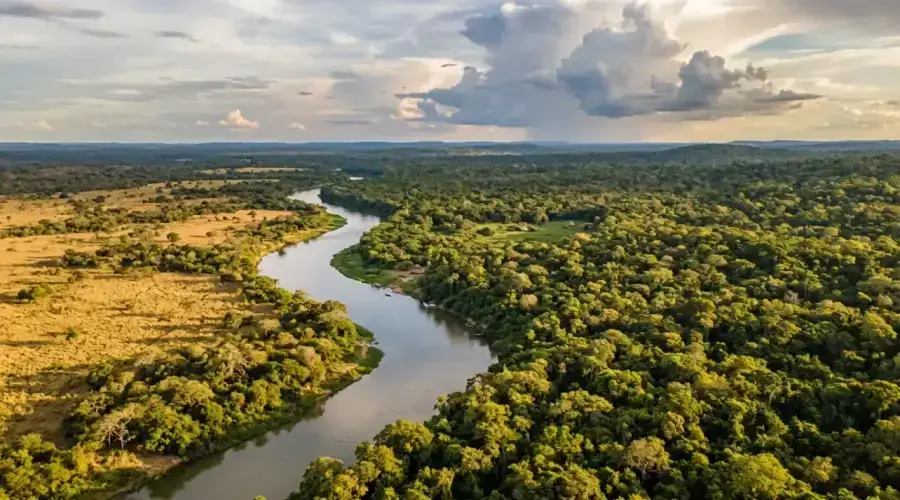

Paraguay has a subtropical climate with well-defined seasons, but above all two very different faces depending on the region: the East, wetter and greener, and the Chaco, dry and arid with extreme temperature ranges. The best time to go depends on your heat tolerance, your itinerary and what you want to see. A cultural tourism trip around Asuncion and the Jesuit missions does not have the same ideal calendar as an expedition in the Chaco.
At a Glance
When to go depending on your profile
- •General tourism, Jesuit missions, Asuncion: March to May or September to November (22-28 C, the best climate window)
- •National parks and Chaco: May to September, dry season, passable tracks
- •Encarnacion Carnival: January-February, peak heat and crowds, prices at their highest
- •Caacupe Pilgrimage: 8 December, 1.5 million faithful, book accommodation well in advance
- •Best compromise: September to November, pleasant climate everywhere, few people
Climate Calendar by Season
Paraguay has a humid subtropical climate in its eastern half (Paranena), with marked thermal seasons, and a dry tropical climate in the Chaco where temperature ranges are more extreme. The austral summer (December to February) brings temperatures that regularly exceed 35 C in Asuncion and can reach 45 C in the Chaco, with relative humidity reaching 80% in the East. It is a heavy heat that slows down the pace of life: Paraguayans themselves adapt their schedules, taking a siesta in the hottest hours and resuming activities in the late afternoon.
The austral autumn (March to May) offers a milder climate: maximum temperatures drop to around 28 C, nights remain mild (15-18 C), and rainfall decreases progressively. It is the ideal season to combine a cultural circuit in Asuncion and the Jesuit missions with an incursion into the Chaco, provided you leave before the great heat of November. Spring (September to November) shares similar characteristics, with gradually rising temperatures and lush vegetation after the dry season.
| Climate summary by season | ||
|---|---|---|
| Summer (Dec-Feb) | 30-45 C | Hot and humid (East), very hot and dry (Chaco). Heavy rain in the East. Ideal only for Carnival |
| Autumn (Mar-May) | 22-28 C | Pleasant temperatures. Moderate rain. Best season for general tourism |
| Winter (Jun-Aug) | 5-22 C | Cool nights, mild days. Dry season. Ideal for the Chaco and trekking |
| Spring (Sep-Nov) | 22-30 C | Rising temperatures. Flowering vegetation. Good compromise |
Dry Season vs. Rainy Season
According to climate data published by DINAC (Directorate of Meteorology and Hydrology, the official weather authority of Paraguay), the rainy season generally runs from October to April, with heavier and more frequent rainfall in the East of the country. The Chaco, meanwhile, remains generally dry all year round, but experiences some violent storm episodes in the warm season that can turn a dirt track into an impassable quagmire for several days. The dry season (May to September) is therefore preferable for any travel in the deep Chaco, by 4x4 or on itineraries away from paved roads.
The impact of the rainy season on a classic itinerary in the East of the country remains moderate: main roads are paved, large cities are accessible, and the Jesuit missions of Trinidad and Jesus can be visited without particular difficulty even in a downpour. However, waterfalls like Salto Cristal or Salto Suizo are more spectacular after rain, and the vegetation of the Mbaracayu reserve is at its peak between January and March. The choice of season therefore depends less on rainfall itself than on access to secondary Chaco tracks and remote regions of the East, which constitute the real decision criterion.
Event Calendar to Know
Beyond the climate, the calendar of Paraguayan festivals and events can alone justify choosing your travel dates. The Encarnacion Carnival, running from January to February at the local Sambodrome, is the largest carnival in the country: six comparsas, hundreds of dancers, and an average of 30,000 spectators per night over four weekends. If you plan your trip for this period, be aware that accommodation in Encarnacion and the surrounding area books up several months in advance and flight prices are at their peak.
The Caacupe Pilgrimage, on 8 December, is the most important religious event in the country, with over one and a half million faithful converging on the Caacupe basilica. Hotels are full weeks in advance within a 50-kilometre radius. Easter Week (March-April) is marked by a huge population movement: Paraguayans return to their home towns, buses are full and roads congested. It is a fascinating period for observing traditions, but less so for travelling quickly. 14-15 May, Independence Day, offers military parades and patriotic atmosphere in all major cities.
- 1Encarnacion Carnival (January-February): the largest carnival in the country, parades every weekend
- 2Easter Week (March-April): processions and culinary traditions (chipa) throughout the country
- 3Independence Day (14-15 May): parades and civic events
- 4Caacupe Pilgrimage (8 December): major religious festival, over one million pilgrims
- 5Chipa Festival (Coronel Oviedo, Easter Week): gastronomy and crafts
- 6Rally Transchaco (September): motorsport competition across the Chaco
Periods to Avoid Depending on Your Profile
December to February combines extreme heat (up to 45 C in the Chaco) and high humidity in the East, an exhausting combination if you are not used to it, especially for walking or spending long periods outdoors. The rainy season (October-April) can also make some Chaco tracks impassable from one day to the next after a storm. If you are not specifically seeking Carnival or the Caacupe pilgrimage, these periods should be avoided on a first exploratory trip.
Conversely, do not underestimate the Paraguayan winter (June-August) if your itinerary includes the Chaco: days remain hot (20-25 C), but nights can drop to 5 C, even less in the deep Chaco where the temperature range is maximal. Travellers who only bring tropical clothing end up shivering at night around the campfire on Chaco estancias. The packing page gives the details by season. For trekking and nature lovers, prioritise the April-June or September-October window, which combines bearable temperatures and landscapes at their best.
Last updated:
Sources
- SENATUR: Tourist Information Paraguay (2025)
- WHO: Paraguay Country Health Profile (2024)
- DINAC: Directorate of Meteorology and Hydrology (official climate data Paraguay) (2025)
- CDC: Travel Health Notices Paraguay (2025)
- Budget Your Trip: Paraguay Travel Costs (2024)
- France Diplomatie: Travel Advice Paraguay (2025)
- IATA Travel Centre: Paraguay (2025)
My method
This page is written from France, sourced as carefully as possible, but I can be wrong or miss on-the-ground detail. A price that changed, outdated info, a photo to share? Every correction is credited if you want.
Report an error or send info →Share