
Benjamin M. · Founder & editor
This is not a list of superlatives for promotional purposes: these are 100 concrete reasons, gathered over the course of my research on the country, that explain why Paraguay deserves a closer look: both for a trip and for a real move. Its honest counterpart also exists, in 100 reasons to hesitate (see Also read).
The 100 Reasons
- 1One of the lowest daily budgets in South America, both for travel and everyday life.
- 2Rents widely lower than in Buenos Aires, Sao Paulo or Santiago.
- 3A territorial tax system: income earned abroad is not taxed locally.
- 4A tax incentive regime for exports (maquila) that attracts industrial companies.
- 5Fresh and cheap tropical fruit and vegetables all year round at local markets.
- 6Skilled labour (crafts, construction, services) accessible at modest rates.
- 7Electricity that is almost entirely hydroelectric, with competitive domestic rates.
- 8A real estate market still accessible in most cities, including Asuncion.
- 9Cheap intercity bus journeys, even over long distances.
- 10Few bank charges or hidden taxes on locally produced basic necessities.
- 11Inflation that, in regional comparison, remains relatively controlled over time.
- 12Domestic and catering services accessible in daily life.
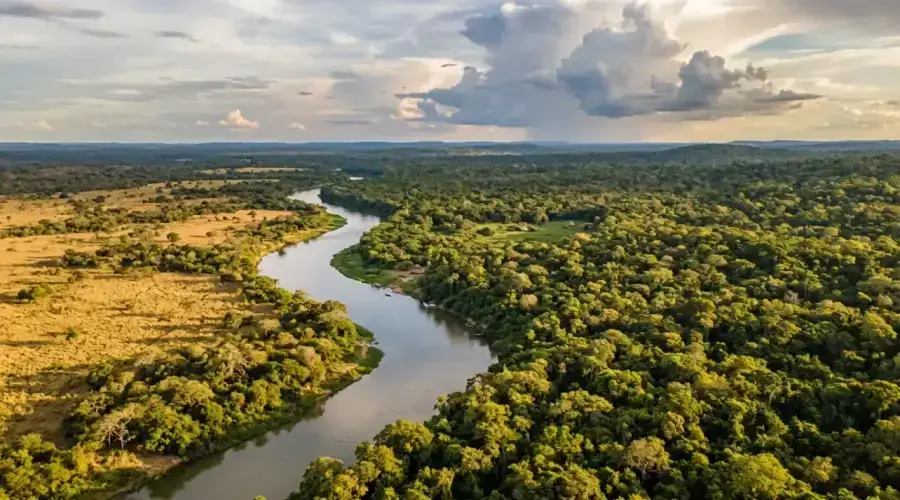
- 13The Chaco, one of the last great wild dry forests of South America.
- 14National parks still little visited: Defensores del Chaco, Cerro Cora, Ybycui.
- 15Waterfalls away from the crowds, like Salto Cristal or Saltos del Monday.
- 16Remarkable wildlife: jaguars, tapirs, giant anteaters, caimans: in a still little-touristed country.
- 17Lake Ypacarat and its shores, less than an hour from Asuncion.
- 18Direct access to Iguazu Falls from Ciudad del Este, a few hours drive away.
- 19Contrasting landscapes in a single country: Atlantic forest, savannahs, wetlands, arid Chaco.
- 20Significant birdwatching potential, still little structured for tourism.
- 21The Mbaracayu reserve, refuge for biodiversity threatened elsewhere on the continent.
- 22Nature accessible without the crowds or prices of the better-known South American destinations.
- 23The Pantanal shared with Brazil and Bolivia, at the gates of the Chaco.
- 24Estancias and lodges that open their lands to ecotourism.
- 25An official Spanish-Guarani bilingualism found nowhere else in South America.
- 26An indigenous language, Guarani, spoken daily by the majority of the population.
- 27Living crafts: nanduti lace, ao po'i weaving, Aregua ceramics.
- 28Music born in the country: Paraguayan harp, polka, guarania.
- 29Terere, a daily social ritual shared between strangers as among friends.
- 30A Jesuit heritage declared a UNESCO World Heritage Site: the ruins of Trinidad and Jesus de Tavarangue.
- 31A history marked by voluntary isolation and then reconstruction after the War of the Triple Alliance.
- 32Local festivals still authentic, like the San Juan festival or the Encarnacion carnival.
- 33An accepted mestizo identity, between Guarani heritage and Spanish colonisation.
- 34Hospitality often cited by travellers as the country's real surprise.
- 35A rich craft and textile scene in Itaugua and Yataity.
- 36A capital, Asuncion, among the oldest cities in South America (founded in 1537).
- 37A subtropical climate with long mild seasons (March-May, September-November).
- 38Generally mild winters (15-25 C), without snow or widespread frost.
- 39A dry season favourable for long journeys and discovering the Chaco.
- 40Generous sunshine most of the year.
- 41No exposure to hurricanes, unlike much of the Caribbean and Central America.
- 42Almost zero seismic risk, as the country is far from Andean subduction zones.
- 43Nature that stays green all year round thanks to well-distributed rainfall.
- 44A crime rate generally lower than that of neighbouring Brazilian or Argentine metropolises.
- 45A centre and south of the country considered safe by most foreign diplomatic services.
- 46Neighbourhood life still based on trust and community, even in Asuncion.
- 47Little mass tourism, therefore few of the typical scams found on major tourist routes.
- 48Rural areas where the door is often left open, in a relationship of trust that surprises visitors.
- 49A dedicated tourist police at major sites, coordinated by SENATUR.
- 50A pace of life that leaves room for the unexpected without constant anxiety.
- 51Crime concentrated in well-identified areas (northeastern borders), avoidable with a well-prepared trip.
- 52Chipa, cassava starch and cheese bread, in endless variations.
- 53Sopa paraguaya, that corn cake that bears its name poorly.
- 54Paraguayan asado, a shared barbecue with family or friends on weekends.
- 55Vori vori, comforting chicken and corn ball broth.
- 56Tropical fruits (mango, papaya, guava, pineapple) abundant and cheap.
- 57Mbeju, cassava starch and cheese cake, a street food speciality.
- 58Generally safe street food, frequented by locals themselves.
- 59Terere and mate, two rituals around yerba, one cold and one hot.
- 60Local quality dairy and cheese production, the base of numerous dishes.
- 61Regional wines and beers at accessible prices, often served on the terrace.
- 62A simplified temporary residence process since the 2022 reform.
- 63An administration that, despite its slowness, remains accessible without needing a prior network of contacts.
- 64Company creation procedures possible with limited initial capital.
- 65A bus network that covers the essentials of the useful territory, without needing a car everywhere.
- 66Private healthcare of a good standard in Asuncion, at rates incomparable with Europe.
- 67A prepaid SIM card accessible upon arrival, top-upable at any shop.
- 68An international banking network (Visa, Mastercard) widely accepted in the city.
- 69A small but real expatriate community, particularly in Asuncion.
- 70International and bilingual schools available in the capital.
- 71A business climate considered stable by several regional financial bodies.
- 72A central position in the heart of Mercosur, between Argentina, Brazil and Bolivia.
- 73Ciudad del Este, a border shopping hub with Brazil and Argentina.
- 74Easy access to regional getaways (Iguazu, Buenos Aires, Rio) from Asuncion.
- 75A border with Brazil that opens up commercial and cultural exchange prospects.
- 76A modestly sized country, where internal distances remain manageable within a day's drive.
- 77A less hurried pace of life than in Europe or the big South American metropolises.
- 78An emphasis on family and shared time, visible in daily life.
- 79Little noise and urban density outside Asuncion's centre.
- 80Hospitality recognised as warm, even towards foreigners who make the effort to speak Spanish.
- 81Intense community and religious life, a source of social connection for those who settle.
- 82A cost of living that allows a comfortable standard of living on a modest budget.
- 83Green spaces and urban parks in Asuncion (Costanera, Botanical Garden).
- 84A human scale to the main cities, far from the excesses of Buenos Aires or Sao Paulo.
- 85Gastronomy and crafts that remain accessible even on a local resident's budget.
- 86A strong national identity, proudly asserted despite a difficult history.
- 87A country still little covered by the media, therefore a discovery without the already worn-out tourist cliches elsewhere.
- 88A local festival scene (music, crafts, gastronomy) accessible all year round.
- 89Archaeological sites and Jesuit missions that rival those of Peru or Bolivia, more discreetly.
- 90A diaspora and Mennonite communities in the Chaco that add an unexpected cultural facet.
- 91A powerful agricultural economy (soy, beef) that structures typical rural landscapes.
- 92Progressive growth of the service and digital sector in the capital.
- 93A country that does not appear on any avoid list, far from the continent's risk zones.
- 94A currency whose fluctuations remain manageable for daily life, despite international upheavals.
- 95A capital that is reinventing itself, between renovated historic neighbourhoods and new business districts.
- 96Journeys within the country that reveal a still preserved rural way of life.
- 97A young population that promises lasting demographic dynamism.
- 98A country that often surprises those who arrive without precise expectations: for the better, much more than for the worse.
- 99A network of parks and reserves that is expanding, driven by a recent ecological awareness.
- 100A country that lets itself be discovered without a fixed itinerary, at whatever pace you choose.
Last updated:
Sources
My method
This page is written from France, sourced as carefully as possible, but I can be wrong or miss on-the-ground detail. A price that changed, outdated info, a photo to share? Every correction is credited if you want.
Report an error or send info →Share
Editorial process: This page was written from verified, cross-checked and dated sources. Last updated 5 August 2026. Our editorial charter