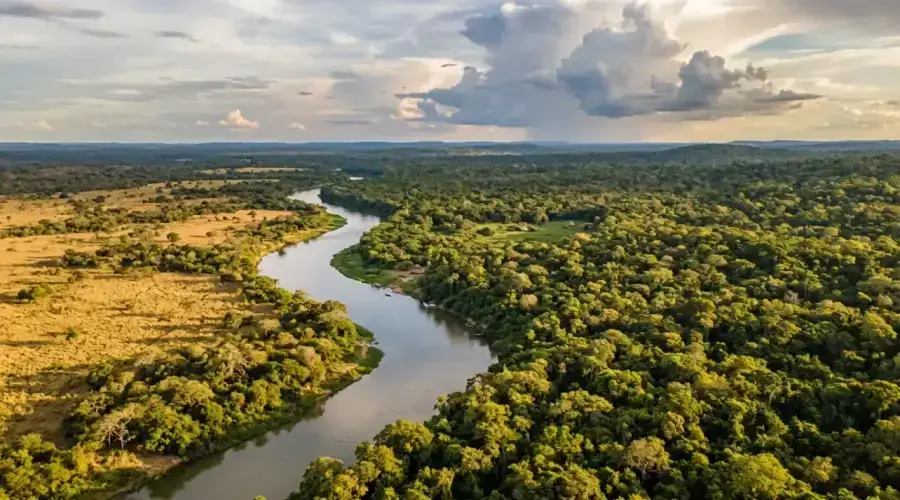

Lake Ypacaraí is the most famous body of water in Paraguay, and undoubtedly the most laden with history and emotions. With a surface area of approximately 60 km² and a length of 24 kilometers, it occupies a valley between the hills of the Cordillera, 40 kilometers from Asunción. It is a shallow lake, its maximum depth does not reach 3 meters, making it particularly vulnerable to pollution and eutrophication. Its name comes from Guaraní and means "sacred lake" or "lake of spirits," depending on the interpretation. But it is above all music that has made Lake Ypacaraí world-famous: the guarania "Recuerdos de Ypacarai," composed in 1953 by Demetrio Ortiz, is probably the most famous Paraguayan song in the world, covered by dozens of international artists. In this guide, I tell you what I discovered exploring this mythical place of Paraguay, between natural beauty, environmental challenges, and cultural heritage. The lake offers varied experiences depending on the access point: wild nature on the northwestern shore, resort atmosphere in San Bernardino, artisan charm in Areguá. Each of its shores tells a different facet of Paraguay.
At a glance
Lake Ypacaraí at a glance
- •60 km² surface area, 24 km long, max depth 3 m
- •Immortalized by the guarania "Recuerdos de Ypacarai" (1953)
- •Bordered by Areguá to the south and San Bernardino to the northeast
- •Activities: kayaking, sailing, fishing, boat rides
- •Chronic pollution problems, cleanup efforts underway
- •Music festivals on its shores in summer
Geography and formation of the lake
Lake Ypacaraí is a valley lake, formed by the natural dam of the Cordillera de los Altos. It is fed mainly by the Yukyry stream and runoff water from the surrounding hills. Its only outlet is the Salado River, which joins the Paraguay near Asunción. With an average depth of 1.8 m and a maximum of 3 m, the lake is exceptionally shallow, making it sensitive to climate variations and algae blooms.
The lake basin covers approximately 1,000 km² and includes several cities: Areguá, San Bernardino, Capiatá, Luque, and Itauguá. This intense urbanization around the lake is one of the main causes of its environmental degradation. Domestic wastewater, agricultural runoff, and solid waste contribute to the eutrophication of the lake, a process that causes green algae blooms and a decrease in dissolved oxygen.
Recuerdos de Ypacarai: the lake in culture
Impossible to talk about Lake Ypacaraí without evoking the guarania that made it famous worldwide. "Recuerdos de Ypacarai" was composed in 1953 by the Paraguayan musician Demetrio Ortiz, inspired by the beauty of the lake and perhaps by a personal love story. The lyrics evoke a lost love on the shores of the lake, under a starry sky. The song achieved international success, reinterpreted by artists as diverse as Los Tres Paraguayos, Julio Iglesias, Ray Conniff, and the Gipsy Kings.
Beyond this song, Lake Ypacaraí occupies a central place in the Paraguayan cultural imagination. It is the subject of numerous artworks, poems, and photographs. Every year, music festivals are organized on its shores, especially in Areguá (Festival del Lago, in February) and in San Bernardino (summer concerts). The lake is also a strong identity symbol: to speak of Ypacaraí is to speak of all of Paraguay, of its beauty as well as its difficulties.
Pollution and restoration efforts
Since the 1980s, Lake Ypacaraí has suffered from worrying environmental degradation. The rapid urbanization of its basin, the discharge of untreated wastewater, the use of chemical fertilizers in agriculture, and solid waste have caused accelerated eutrophication of the lake. Algal blooms (proliferation of green algae) have become a recurring phenomenon, especially in summer, giving the lake an unattractive green color and emitting nauseating odors. Swimming is regularly discouraged, even prohibited, during these episodes.
Faced with this situation, the Paraguayan government has launched several restoration plans. The most ambitious is the Environmental Sanitation Program for the Lake Ypacaraí Basin, a 15-year program financed by the Inter-American Development Bank (IDB) and the national government, for a total amount of over 200 million dollars. The main measures include the construction of wastewater treatment plants, solid waste management, reforestation of the shores, and awareness-raising among riverside populations. Encouraging results have been observed since 2020, but the road is still long.
The towns around the lake
Lake Ypacaraí is bordered by several towns worth visiting. On the southern shore, Areguá is the most interesting for its handicrafts and basilica. On the northeastern shore, San Bernardino concentrates the resort and nightlife offerings. Between them, the northwestern shore is less urbanized: the towns of Capiatá and Itauguá, located on the southwestern tributaries, offer a glimpse of rural Paraguayan life, with their colonial churches and local markets. The northwestern shore is the wildest: accessed by dirt roads that cross sugarcane and yerba mate plantations, offering isolated views of the lake.
Each of these towns has its own identity. Itauguá is known for its ñandutí, the traditional Paraguayan lace, which can be bought directly from the weavers. Capiatá has a 17th-century Franciscan church, one of the oldest in the region. Luque, located a few kilometers to the southwest, is the center of filigree silver craftsmanship in Paraguay. The ideal is to spend a day driving around the lake, stopping at each of these towns to discover their specialties. The full loop is about 60 kilometers and can be done at a leisurely pace including stops.
Activities around the lake
Despite its environmental problems, Lake Ypacaraí remains a very popular leisure and relaxation spot, especially on weekends. Water activities are the most popular: kayaking, small sailing, stand-up paddle, paddle boats, and sport fishing. Equipment can be rented on the beaches of Areguá and San Bernardino. Boat rides, organized from both shores, allow you to discover the lake as a whole and observe water birds: herons, cormorants, wild ducks, and more rarely, jabirus.
| Activities by access point | |
|---|---|
| Areguá (southern shore) | Kayaking, paddle boats, boat rides, handicraft market |
| San Bernardino (northeastern shore) | Motorized water sports, beach clubs, sailing |
| Playa Altos | Swimming, picnic, tranquility |
| Fishing | Local bait in fishing villages, typical fish: surubí, dorado |
The sunsets on the lake are one of the most appreciated spectacles in the region. From Areguá, the view covers the entire surface of the lake with San Bernardino opposite and the hills of the Cordillera in the background. The light changes rapidly, passing from blue to pink and then orange in a few minutes. I recommend settling in on the terrace of a café in the port of Areguá to enjoy it, with a tereré in hand.
When to go and practical tips
| Useful information | |
|---|---|
| Best period | March-May and September-November (mild weather, less algae blooms) |
| Peak tourist season | December to February (lively beaches, swimming possible depending on water quality) |
| Festival del Lago (Areguá) | February, free concerts on the lakeshore |
| Access | 40 km from Asunción via Route 2 then local roads |
| Boating | Kayak, paddle boat, and sailing available in Areguá and San Bernardino |
Lake Ypacaraí is easily discovered by combining Areguá and San Bernardino. The road that borders the southern shore offers the best views. If you have a car, I recommend driving the full loop around the lake (about 60 km), allowing 2 to 3 hours with stops. Buses regularly connect Asunción with Areguá and San Bernardino, allowing access to the lake without a personal vehicle.
Sources
- Encyclopaedia Britannica - Lake Ypacarai (2025)
- SENATUR - Lake Ypacarai
- ABC Color - Recuerdos de Ypacarai, a guarania that crossed borders
- SENATUR - Tourism in Paraguay
- ABC Color - Pollution of Lake Ypacarai
- Ultima Hora - Lake Ypacarai cleanup advances (2025)
- Visit Paraguay - Lakes and rivers
- Encyclopaedia Britannica - Demetrio Ortiz (2025)
My method
This page is written from France, sourced as carefully as possible, but I can be wrong or miss on-the-ground detail. A price that changed, outdated info, a photo to share? Every correction is credited if you want.
Report an error or send info →Share